
Ant & Carpenter Ant Season in Ontario: When to Act Before Infestations Grow
Ant activity in Ontario begins as temperatures rise in early spring, typically from March onward, and intensifies through late spring and summer. During this period, pavement ants and carpenter ants become active as they search for food, expand their colonies, and establish nesting areas in and around homes.
For homeowners in Toronto and the GTA, this early-season window is the most effective time to act—before colonies expand and become more difficult to control.
Let’s dive right in the ants and carpenter ants removal offer:
- Offer 1: Ant Removal Offers
- Offer 2: Carpenter Ant Removal Offers
- Offer 3: Full Protection Ants & Carpenter Ants Removal Offer
When do ants and carpenter ants become active in Ontario?
Ant colonies do not disappear in winter—they slow down.
- Late winter (February–March): Colonies remain inactive beneath soil or inside structural voids
- Early spring (March–April): Worker ants begin emerging as ground temperatures rise
- Mid to late spring (April–June): Colony expansion accelerates, and indoor sightings increase
- Summer (June–August): Peak activity, with visible trails and multiple nesting sites
Carpenter ants behave differently from typical ants because they often nest inside wood structures. This allows them to remain partially active indoors even when outdoor conditions are still cold.
What is the difference between pavement ants and carpenter ants?
Although both are common in Ontario, they behave very differently.
Pavement ants
- Nest outdoors in soil, cracks in concrete, and under walkways
- Enter homes primarily in search of food
- Commonly seen in kitchens, along baseboards, and near entry points
- Do not damage structures
Pavement ants
- Nest outdoors in soil, cracks in concrete, and under walkways
- Enter homes primarily in search of food
- Commonly seen in kitchens, along baseboards, and near entry points
- Do not damage structures
The distinction is important:
pavement ants are feeding inside your home, while carpenter ants may already be living inside it.
Why early spring is the most effective time to control ants
Early spring is the point where ant activity becomes visible—but the colony is still in a manageable stage. What appears as a few ants indoors is often the beginning of a larger seasonal expansion.
At this stage:
- Colonies are still developing, with lower population size
- Food trails are newly forming, making them easier to trace and disrupt
- Nesting locations are more centralized, allowing targeted treatment to be more effective
Treating ants during this window allows control methods to reach and impact the colony before it grows and spreads.
When treatment is delayed into late spring or summer:
- Colonies expand and may split into multiple nests
- Indoor activity becomes more frequent and widespread
- Treatment requires broader coverage and multiple interventions
For carpenter ants, timing is especially critical. Early intervention helps limit nesting inside wood structures, reducing the risk of structural damage and more invasive repair work later on.
How ants enter and spread inside a home
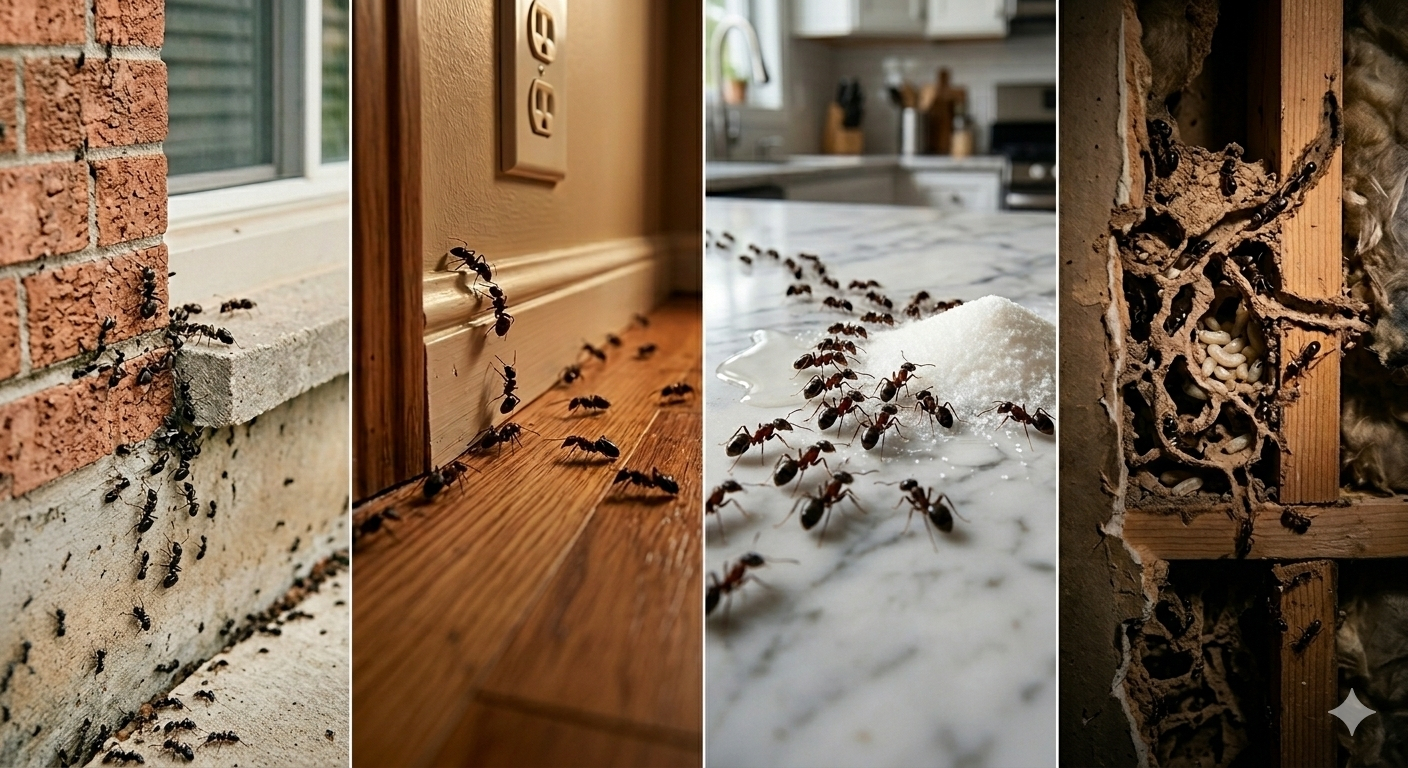
Ant infestations follow consistent patterns. Ants do not appear randomly indoors—they follow predictable access patterns.
Entry points often include:
- Gaps around windows and doors
- Cracks in foundation walls
- Utility penetrations
- Damaged exterior seals or vents
Once inside, ants establish pheromone trails that guide other ants to food sources. These trails remain active unless properly treated.
Carpenter ants take a different approach:
- They locate moisture-damaged or soft wood
- Build internal nesting galleries
- Expand deeper into structural areas over time
Surface treatments alone do not eliminate these internal nests.
Signs of an early ant or carpenter ant problem
Pavement ants
- Small trails forming along floors or countertops
- Increased activity during warmer days
- Reappearance after cleaning
Carpenter ants
- Larger ants seen indoors, often individually
- Activity increasing at night
- Fine wood debris near baseboards or window areas
- Occasional faint rustling sounds inside walls
How to reduce the risk of infestation
Exterior measures
Focus on limiting how ants enter the structure.
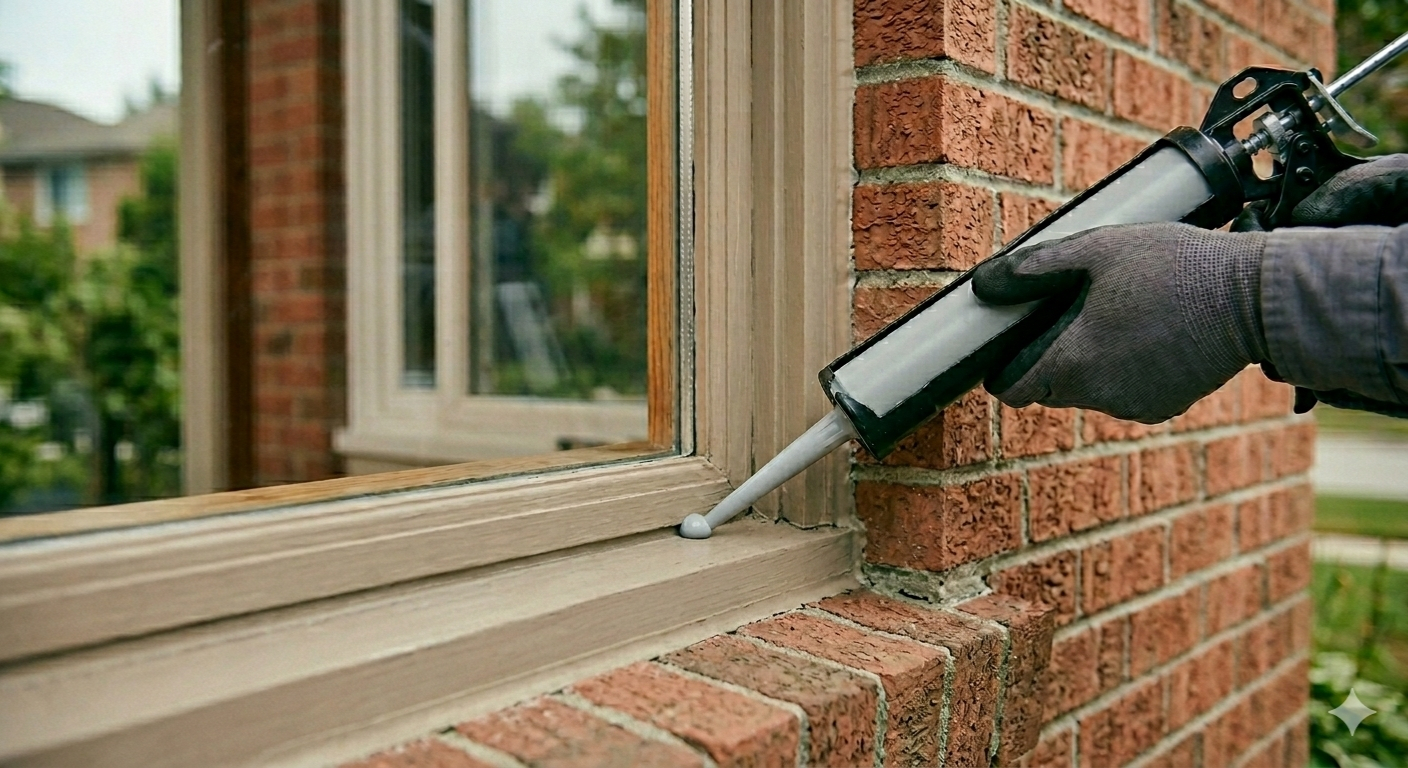
- Seal visible cracks and entry points
- Repair damaged vent covers and gaps
- Keep soil, mulch, and vegetation away from the foundation
Interior measures
Reduce what attracts ants once they reach indoor areas.
- Store food in sealed containers
- Clean surfaces regularly
- Avoid leaving food residue overnight
Moisture control
Address conditions that support nesting, especially for carpenter ants.
- Repair leaks and condensation issues
- Address damp wood areas
- Improve ventilation in enclosed spaces
Contact us today and be on your way to enjoying a safe and peaceful home for years to come.
Why effective treatment targets the colony
Ant control is not about eliminating visible ants—it is about eliminating the source.
Seeing ants indoors usually means the colony is already established nearby or inside the structure. The ants you see are only a small portion of the population—removing them does not stop the colony from continuing to grow.
Effective ant treatment focuses on the source of the activity:
- Active trails and movement patterns to trace where ants are coming from
- Structural entry points that allow ongoing access into the home
- Nesting areas, especially critical for carpenter ants inside wood
- Exterior perimeter protection to block new entry and future activity
When treatment only addresses visible ants, the colony remains active and continues sending workers inside. This is why activity often returns within days or weeks if the source is not properly treated.
Seasonal ant control vs one-time treatment
One-time treatment
Best suited when activity is limited and recently noticed.
- Suitable for early-stage or isolated activity
- Targets active areas and entry points
- Includes short-term follow-up coverage
Seasonal program (spring & summer)
Used when ant activity is recurring or expected during peak months.
- Provides multiple treatments during peak activity
- Maintains a protective barrier around the property
- Reduces recurring infestations
Year-round protection
Recommended for properties with ongoing or multi-season pest exposure.
- Ongoing monitoring and prevention
- Covers multiple pest types
- Designed for properties with consistent pest pressure
Current seasonal ant and carpenter ant services
Ant Removal Promotions

Pavement Ant Treatment
Starting at $250.00 + tax | $350.00 + tax
- Targeted treatment of entry points, cracks, and crevices
- Exterior perimeter application to stop ants at the source
- Includes 30-day warranty
Seasonal Ant Spray Program
Starting at $450.00 + tax | $500.00 + tax
- 3 scheduled treatments during peak ant season
- Creates a protective barrier around your home
- Ideal for ongoing prevention and control
Carpenter Ant Removal Promotions

Carpenter Ant Treatment
(One-Time Service)
Starting at $450.00 + tax | $550.00 + tax
- Specialized treatment for wood-destroying carpenter ants
- Includes inspection of nesting areas and targeted application
- 60-day warranty included
Carpenter Ant Seasonal Program
(Spring & Summer)
Starting at $650.00 + tax | $850.00 + tax
- Multiple treatments throughout active months
- Designed to eliminate active colonies and prevent reinfestation
- Best option for properties with recurring activity
Carpenter Ant Yearly Protection Plan
Starting at $850.00 + tax | $950.00 + tax
- Full-year monitoring and service
- Priority response and follow-ups
- Long-term protection for your home and structure
Home Protection Promotions
Full Home Protection Promotion
(Year-Round Coverage)
Starting at $1200.00 + tax | $1400.00 + tax
For properties with ongoing pest activity, a single treatment is often not sufficient. This program is designed to maintain consistent protection throughout the year, not just react to problems after they appear.
- Covers 21 common household pests, including ants, spiders, cockroaches, silverfish, and earwigs
- Scheduled treatments across seasons to address changing pest behaviour and activity cycles
- Service calls included between visits if activity returns
- Reduced cost on additional services (including wildlife removal)
When should you schedule an inspection?
Ant problems develop gradually, but once activity becomes consistent, the colony is already established. Acting during the early phase—when signs are present but limited—allows the issue to be addressed before it spreads into multiple nesting areas.
Best timing:
- Early signs of activity appear
- Trails are visible but limited
- Carpenter ants are seen indoors, even occasionally
Delaying action often leads to:
- Larger, more established colonies
- Multiple nesting sites
- Increased treatment complexity
Key takeaways for homeowners
- Ant activity begins in early spring and peaks in summer
- Pavement ants are nuisance pests; carpenter ants can impact wood structures
- Early treatment improves effectiveness and reduces recurrence
- Cleaning alone does not eliminate an infestation
- Exterior barriers and targeted treatments are necessary for long-term control
About Icon Pest
Addressing ant activity early reduces the need for more extensive treatment later and helps prevent structural concerns in the case of carpenter ants.

Recent Comments