
Hantavirus, Mice, and Rodents: What Homeowners Should Know
Hantavirus is a known rodent-borne virus that can make people seriously ill when contaminated rodent urine, droppings, saliva, nesting material, or dust is disturbed and inhaled. It is not a new or unknown virus, and it should not be treated like COVID-19. The risk is uncommon, but any sign of mice or rats inside a home, garage, shed, attic, crawl space, cottage, warehouse, or business should be handled carefully.
Rodent control is not only about catching mice or rats. A safe response also includes identifying how rodents entered, removing active rodents, sealing entry points, reducing food sources, and handling contaminated areas with proper cleanup precautions.
Hantavirus Explained in Plain Language
Hantaviruses are a group of viruses that can be carried by some rodents. People may become exposed when contaminated rodent waste dries, breaks apart, and becomes airborne. This can happen during sweeping, vacuuming, renovation, storage cleanup, attic work, or disturbing nests and droppings without proper protection.
The main concern is not simply seeing a mouse. The higher-risk situation is finding rodent droppings, urine, nests, damaged insulation, chewed materials, or contaminated dust and then disturbing those materials without safe cleanup procedures.
Rodent urine, droppings, saliva, nesting material, and dust in enclosed spaces should always be handled carefully.
Hantavirus Is Not a New Virus
Hantavirus is not a newly discovered virus. Hantaviruses have been studied for decades and are known to be linked mainly to rodents. Recent public attention around hantavirus does not mean the virus is new or spreading in the same way as COVID-19.
Hantavirus infection is uncommon, but rare cases can become serious. Public health guidance focuses on prevention because exposure can happen when contaminated rodent urine, droppings, saliva, nesting material, or dust is disturbed and inhaled. For property owners, the right response is calm and practical: avoid dry sweeping or vacuuming, limit disturbance, and handle rodent contamination with proper precautions.
Why Hantavirus Is Back in the News
Canada’s public health guidance states that the overall risk to the general population from the Andes hantavirus outbreak linked to the MV Hondius cruise ship remains low. Person-to-person spread in Canada is not expected because transmission requires close, prolonged contact.
For homes, cottages, garages, sheds, storage rooms, and commercial spaces, the practical prevention steps remain: control rodent activity, avoid dry sweeping or vacuuming droppings, handle contaminated material carefully, and arrange professional inspection when the activity is active, hidden, widespread, or recurring.
Reported ANDV Hantavirus Cases and Tracking Dashboard
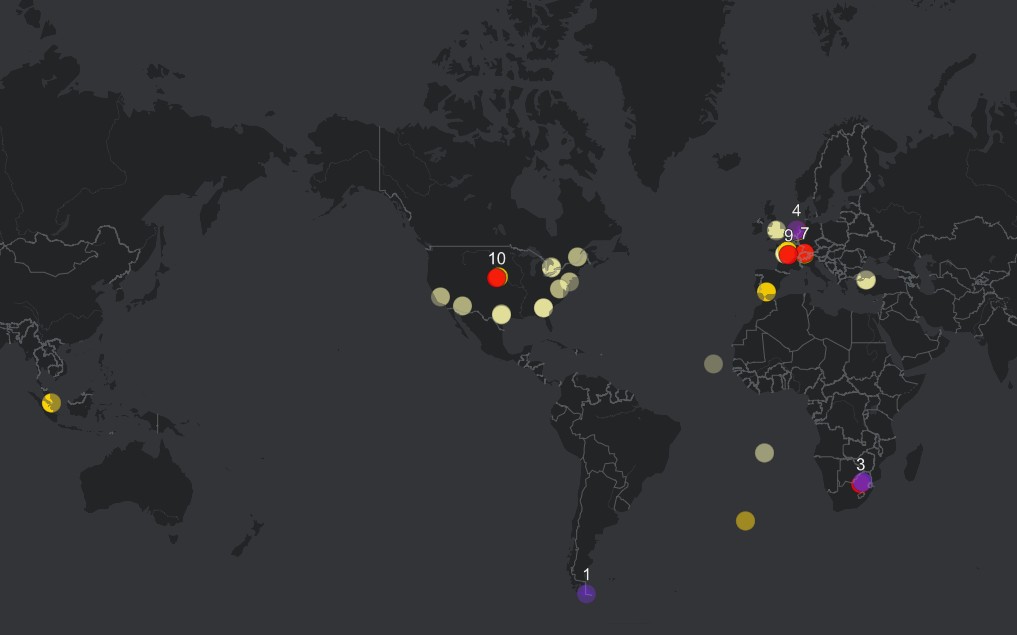
ANDV Hantavirus 2026 tracking dashboard showing global reported case categories. dashboard data may include suspected, confirmed, monitored, or quarantined individuals and should be used as a reference only.
As of May 8, 2026, World Health Organization reported eight cases linked to the MV Hondius outbreak, including six laboratory-confirmed Andes virus cases, two probable cases, and three deaths.
Updated reporting on May 11, 2026, stated that WHO had confirmed seven Andes hantavirus cases among passengers, with nine total reported cases and three deaths. Case numbers may change as testing, contact tracing, and passenger monitoring continue.
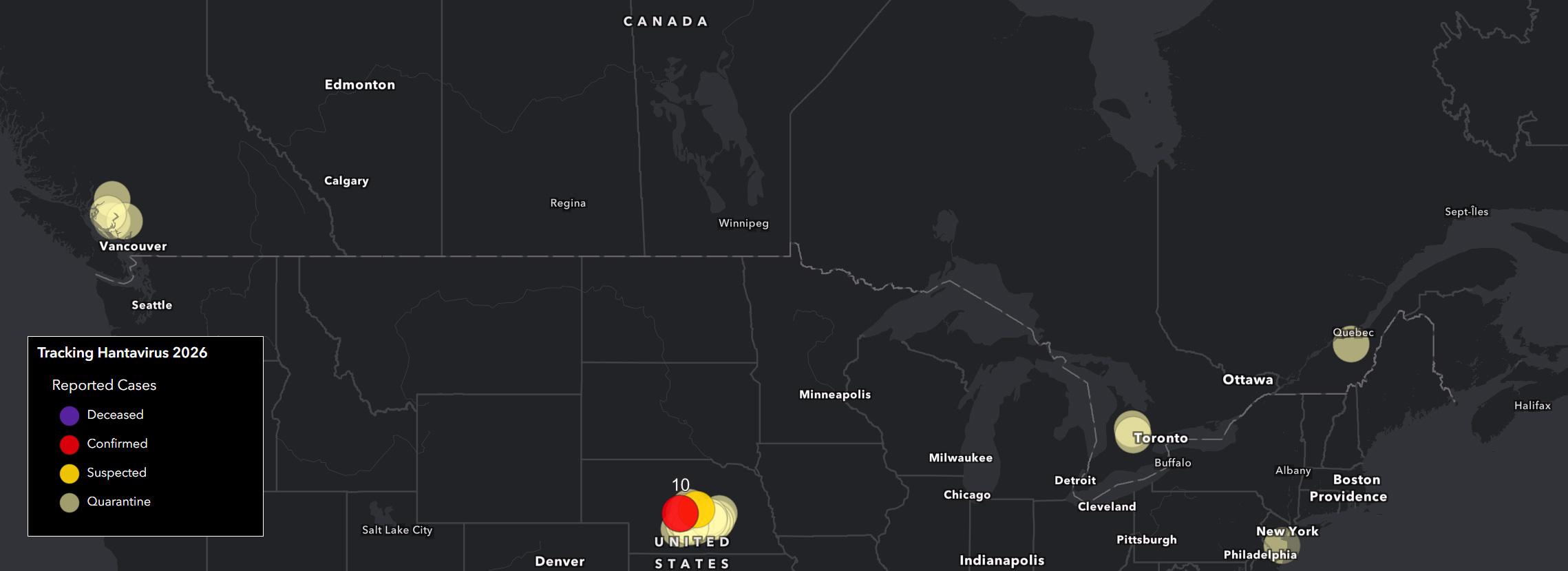
ANDV Hantavirus 2026 dashboard view showing reported case markers in Canada and nearby regions. Case locations are approximate and should not be treated as confirmed precise locations.
Can Hantavirus Spread Between People?
Most hantaviruses do not usually spread from person to person. Andes virus is the exception; it is the only hantavirus known to spread between people, usually through close contact with someone who is ill.
For property owners dealing with mice, rats, droppings, urine, nests, or contaminated dust, the main concern remains rodent contamination. Safe cleanup, proper protective equipment, entry point sealing, and professional rodent control are still the most relevant prevention steps.
How Mice and Rodents Can Create a Health Risk
As rodents move, they may leave droppings, urine trails, nesting material, grease marks, odour, and chewed surfaces behind. These signs may appear along baseboards, behind appliances, near stored food, around insulation, inside cabinets, under sinks, or near openings around pipes and vents.
The health concern becomes greater when contaminated material is disturbed. Dry sweeping, vacuuming, shaking out stored items, moving contaminated boxes, or using compressed air can push particles into the air. If hantavirus is present, airborne contaminated dust is one of the main exposure concerns.
What This Means for Ontario Homeowners
Public Health Ontario states that no human cases of hantavirus pulmonary syndrome have been reported in Ontario to date. That is reassuring, but rodent contamination should still be handled carefully because mice and rats can create sanitation concerns even when hantavirus risk is low.
Rodent activity can affect food areas, storage rooms, insulation, garages, cottages, basements, crawl spaces, warehouses, restaurants, and commercial buildings.
The right response is balanced: do not panic, but do not sweep, vacuum, or disturb rodent droppings without proper precautions.
Risk of Hantavirus Infection in Canada
Canada.ca also reports that, as of May 1, 2026, the National Microbiology Laboratory had confirmed 168 cases of hantavirus infection in Canada since active surveillance began in 1994. That long-term number reinforces the balanced message: hantavirus is uncommon, but rodent contamination deserves careful handling.
Canada.ca states that there is no vaccine available to prevent hantavirus infection, so prevention depends on reducing rodent infestations and cleaning contaminated areas properly.
Canada continues to monitor hantavirus risk with national and international partners, including disease tracking in Canada and the United States.
Symptoms After Possible Hantavirus Exposure
Hantavirus symptoms may appear days to weeks after exposure. Early symptoms can feel similar to the flu and may include:
- Fever
- Fatigue
- Headache
- Muscle aches
- Dizziness
- Chills
- Nausea
- Vomiting
- Stomach pain
- Coughing
In severe cases, hantavirus infection can affect the lungs and cause shortness of breath or serious breathing difficulty. Some hantavirus infections can also affect kidney function, depending on the virus type and the person’s condition.
Anyone who develops flu-like symptoms after contact with rodent droppings, urine, nesting material, or contaminated dust should contact a healthcare provider and mention the possible rodent exposure. Pest control professionals can help manage rodent activity and contamination concerns, but medical symptoms must be assessed by healthcare providers.
If symptoms include shortness of breath, chest tightness, severe weakness, worsening cough, or difficulty breathing after possible rodent exposure, seek urgent medical care or go to the hospital for assessment.
Why Rodent Droppings Should Not Be Swept or Vacuumed
Rodent droppings should not be swept or vacuumed dry. Disturbing dry droppings, urine residue, nesting material, or contaminated dust can release particles into the air. A standard household vacuum can also spread fine particles through airflow or contaminate the vacuum itself.
Safe cleanup begins by controlling dust. Contaminated materials should be wetted with an appropriate disinfectant before removal. Gloves, respiratory protection, and other protective equipment may be needed depending on the level of contamination and the location of the problem.
Attics, crawl spaces, insulation, garages, storage areas, and commercial spaces require extra caution because contamination may be larger than what is visible from the surface.
Where Rodent Contamination Is Commonly Found
Rodents look for warmth, shelter, nesting material, and food. That means contamination can appear in areas people do not check regularly.
Common locations include:
Safe Cleanup Rules for Rodent Droppings and Nesting Material
Small, isolated contamination may sometimes be handled carefully by a homeowner, but larger or hidden contamination should be handled by trained professionals. This is especially true when droppings are widespread, insulation is affected, odour is present, or rodent activity keeps returning.
Follow these core safety rules:
- Do not dry sweep rodent droppings. Sweeping can make contaminated dust airborne.
- Do not vacuum droppings or nests. A regular vacuum is not designed for biological contamination.
- Ventilate the area when safe. Fresh air can help reduce concentrated airborne particles before cleanup begins.
- Wear proper protection. Gloves are basic protection, and respiratory protection may be needed in enclosed or heavily contaminated areas.
- Wet contaminated material before removal. Canada.ca recommends spraying droppings with a household disinfectant or a mixture of 1 part bleach to 9 parts water, then letting the area soak for 10 minutes before wiping up the wet droppings.
- Wipe up wet droppings safely. Use paper towels for smaller areas or a wet mop for larger areas after the disinfectant has had time to work.
- Wash gloves and hands properly. Canada.ca recommends washing gloves with disinfectant and hot soapy water before removing them, then washing hands thoroughly afterward.
- Seal waste before disposal. Contaminated materials should be bagged and sealed carefully.
- Disinfect affected surfaces. Removing droppings does not fully address urine residue, contact surfaces, or odour.
- Avoid disturbing insulation without proper assessment. Contaminated insulation may require professional removal, sanitization, or replacement.
Source for cleanup guidance: Canada.ca — Prevention of a hantavirus infection
Professional cleanup notice: If droppings are widespread, hidden, recurring, mixed into insulation, or connected to odour, Icon Pest strongly recommends calling a trained rodent control professional before disturbing the area. A proper inspection can confirm the next safe step.
Why Mice and Rat Control Should Be Taken Seriously
A rodent problem is not just a nuisance. Mice and rats can contaminate food areas, damage insulation, chew wiring, leave odours, spread bacteria, and reproduce quickly when shelter and food are available.
Even when hantavirus risk is low in a specific property, rodent contamination still creates a sanitation issue. The longer rodents stay active, the more contamination can spread behind walls, into insulation, across storage areas, and around food or utility spaces.
Effective rodent control, including professional mice removal and rat removal, should include:
Inspection
The property must be checked for droppings, entry points, nests, food sources, runways, odour, and structural gaps.
Removal
Active mice or rats must be controlled using appropriate rodent control techniques.
Exclusion
Entry points should be sealed so new rodents cannot keep entering.
Cleanup and disinfection
Affected areas may need safe cleanup, deodorizing, sanitization, or disinfection.
Prevention
Food access, clutter, exterior attractants, and vulnerable openings should be corrected.
Skipping any part of this process can allow the infestation to continue or return.
What Not to Do If You Find Rodent Droppings
Finding mouse or rat droppings can be stressful, especially if they are found in a kitchen, basement, garage, attic, or storage area. Acting too quickly can make the situation less safe.
Avoid these mistakes:
- Do not sweep droppings into a dustpan.
- Do not vacuum droppings with a household vacuum.
- Do not touch nests or dead rodents with bare hands.
- Do not shake out contaminated boxes, fabric, or insulation.
- Do not assume the problem is gone because one mouse was trapped.
- Do not seal random holes before confirming whether activity is still active.
- Do not ignore droppings in attics, crawl spaces, or commercial storage areas.
The safer step is to stop disturbing the area, limit access, and arrange a proper inspection when the activity appears active, hidden, widespread, or recurring.
When Rodent Removal Requires a Professional
Professional rodent removal is recommended when the situation involves health risk, hidden access points, or contamination that cannot be cleaned safely with basic household precautions.
Call a professional if you notice:
A trained rodent control technician can assess the full situation before cleanup begins. That matters because droppings may only be the visible part of a larger infestation.
How Icon Pest Handles Rodent and Hantavirus-Related Concerns
Icon Pest has updated its staff and technicians to speak with customers more clearly about rodent-related health risks, including hantavirus awareness, safe cleanup, prevention, and proper rodent control. The goal is not to create fear. The goal is to help property owners understand why rodent activity should be addressed before contamination spreads.
During a rodent inspection, Icon Pest technicians may check for:
For mice and rats, Icon Pest focuses on eliminating the active infestation and preventing re-entry. Rodents such as mice and rats are handled differently from wildlife. Wildlife such as raccoons, squirrels, skunks, and birds may be handled humanely where appropriate, while mice and rats are controlled using lethal trapping and professional rodent control practices when required.
How to Reduce the Risk Before Rodents Become a Bigger Problem
Practical prevention steps include:
Seal entry points
Gaps around pipes, vents, doors, garage seals, foundation cracks, utility lines, rooflines, and wall penetrations should be identified and sealed properly.
Remove food access
Store pantry items, pet food, bird seed, and waste in sealed containers.
Reduce clutter
Storage piles, cardboard boxes, and unused materials near walls can create shelter and nesting opportunities.
Manage exterior attractants
Garbage, compost, fallen fruit, dense vegetation, sheds, open storage areas, and woodpiles close to buildings can support rodent activity. Canada.ca recommends keeping yards clean and stacking woodpiles away from buildings.
Watch for early warning signs
A few droppings, scratching sounds, or chewed packaging can indicate a larger hidden problem.
Clean affected areas safely
Droppings, urine residue, and nesting material should be disinfected and removed with proper precautions.
Book an inspection before contamination spreads
Early rodent control can reduce damage, odour, cleanup work, and possible exposure to contaminated dust.
If rodent activity is confirmed or suspected, the safest next step is a professional inspection that checks for active rodents, entry points, contaminated areas, and cleanup needs before anything is disturbed.
Need Mice or Rodent Removal From Experts Who Understand Hantavirus Safety?
If you are seeing mice, rats, droppings, nesting material, urine stains, scratching sounds, or signs of contamination, avoid sweeping or vacuuming the area right away. Rodent droppings and nesting material should be handled with proper precautions, especially in enclosed spaces such as attics, crawl spaces, garages, storage rooms, and utility areas.
Icon Pest provides professional mice removal, rat removal, rodent removal, entry point sealing, cleanup guidance, sanitization, and disinfection support. Our technicians inspect the property, identify active rodent movement, locate entry points, and help determine whether cleanup or exclusion work is needed.
For safe, professional rodent control, call Icon Pest before disturbing contaminated areas.
Areas Icon Pest Serves
Icon Pest provides mice removal, rat removal, rodent control, inspection, exclusion, cleanup guidance, sanitization, and disinfection support across multiple service areas.
Areas served include Ajax, Alliston, Aurora, Barrie, Brampton, Concord, Etobicoke, King, Markham, Mississauga, Newmarket, North York, Pickering, Richmond Hill, Scarborough, Thornhill, Toronto, Uxbridge, Vaughan, and Woodbridge.
Frequently Asked Questions About Hantavirus and Rodents
Can mice in a house carry hantavirus?
Can rats carry hantavirus?
Can hantavirus spread from person to person?
Can hantavirus spread through the air?
Should I vacuum mouse droppings?
What should I do if I find mouse droppings?
Do I need professional rodent removal if I only saw one mouse?
Does Icon Pest provide cleanup after rodent activity?
When should I call Icon Pest?
Is there a vaccine for hantavirus?
Key Safety Takeaways
- Hantavirus is a known rodent-borne virus, not a newly discovered virus.
- Hantavirus is uncommon, but rare cases can become serious.
- Exposure can happen when contaminated rodent droppings, urine, saliva, nesting material, or dust is disturbed.
- Most homeowner risk comes from contaminated rodent waste and dust, not casual contact with a mouse.
- Dry sweeping and vacuuming rodent droppings can increase airborne exposure risk.
- Symptoms may include fever, fatigue, muscle aches, headaches, nausea, coughing, and breathing difficulty in severe cases.
- Medical symptoms after rodent exposure should be discussed with a healthcare professional.
- Safe rodent control should include inspection, removal, entry point sealing, prevention, and proper cleanup.
- Professional help is recommended when contamination is widespread, hidden, recurring, or located in attics, crawl spaces, commercial spaces, garages, or insulation.

Recent Comments